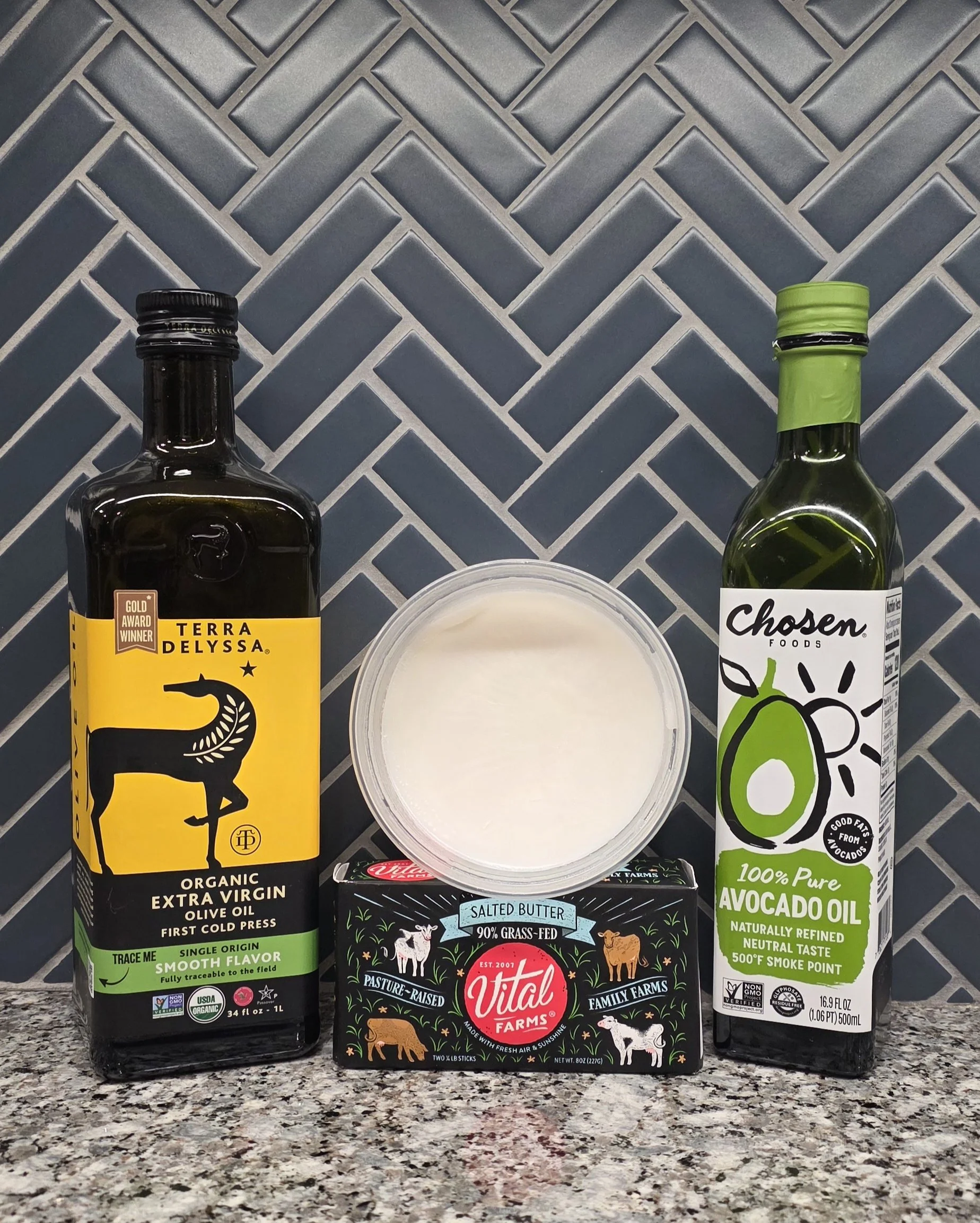
When it comes to cooking fats, everyone has an opinion—and a lot of those opinions are loud. From the rise of seed-oil-free restaurants to the resurgence of old-fashioned animal fats, it can feel confusing to know what’s actually best for your home and your health. So let’s break it down simply and honestly: the good, the not-so-good, and what actually matters in your kitchen.
Seed Oils: Think canola, soybean, sunflower, safflower, vegetable oil blends.
Pros
High smoke points (especially refined varieties).
Neutral flavor.
Inexpensive and widely accessible.
Cons
Heavily processed and often chemically extracted.
High omega-6 content. Omega-6 is linked to inflammation and chronic health issues.
Easily oxidized with heat.
Not ideal for whole-food or traditional-living lifestyles.
Bottom Line: Convenient and cheap, but not the most nourishing option. In fact, many are avoiding them at all costs now-a-days. We will admit, we are on that bandwagon and avoid seed oils. We can’t always avoid them when we are not the ones cooking but in our house, they are given ZERO shelf-space.
Butter: Classic, flavorful, nutrient-rich.
Pros
Delicious flavor.
Contains vitamins A, D, E, K2 (especially grass-fed).
Great for baking and low-heat cooking.
Cons
Low smoke point.
Contains lactose and milk solids.
Can burn easily.
Bottom Line: Wonderful for flavor and nutrition—just keep the heat gentle. Once upon a time, butter was demonized for its fat content. Today, we are learning that not all fat is bad and in fact, you need it to be healthy.
Ghee: Clarified butter with the milk solids removed.
Pros
High smoke point.
Lactose-free.
Shelf-stable.
Rich, nutty taste.
Cons
Pricier than butter or more time consuming if you are making it yourself.
Still dairy-derived.
Stronger flavor that may dominate delicate dishes.
Bottom Line: A high-heat, lactose-free upgrade to butter. Ghee is a great addition to your kitchen! And, you can make it yourself!
Tallow: Traditional, heat-stable rendered beef fat.
Pros
Extremely stable at high heat.
Shelf-stable and minimally processed.
Nutrient-rich when grass-fed.
Excellent for roasting and frying.
Cons
Distinct savory flavor depending on your preferences. We like it!
Can be harder to source but is available online and even some of your local BBQ joints will sell it.
Solid at room temp.
Bottom Line: A powerhouse fat for savory cooking—old-fashioned for a reason. Not only is it great for cooking, it makes an EXCELLENT moisturizer for your skin. More about that in another blog post! Tallow has become one of our all-time favorite skin care ingredients. From soap to moisturizer to sunscreen. We LOVE it!
Olive Oil: One of the world’s oldest and most beloved fats.
Pros
Rich in antioxidants and polyphenols.
High in heart-healthy monounsaturated fats.
Great for low- and medium-heat cooking.
Delicious flavor—grassy, peppery, or buttery depending on the variety.
Cold-pressed and minimally processed when high-quality.
Cons
Smoke point is moderate—not ideal for very high heat.
Quality varies widely; many brands are adulterated or overly refined.
Strong flavor that may not suit every dish.
Bottom Line: Incredible for dressings, drizzling, roasting, and everyday cooking—just avoid scorching it. Olive Oil can be great but finding a quality brand is very important and can be hard. Make sure you are looking for Extra Virgin Olive Oil in a dark glass bottle, check for a more recent harvest date, look for a single point of origin and quality seals from trusted organizations.
Avocado Oil: The “modern” monounsaturated darling.
Pros
Very high smoke point (especially refined).
Mild, buttery flavor that works with almost anything.
Rich in monounsaturated fats, similar to olive oil.
Great for high heat, sautéing, and frying.
High-quality cold-pressed options available.
Cons
More expensive than most oils.
Many brands are mixed with cheaper oils (mass adulteration is well documented).
Refined versions lose some nutrients.
Bottom Line: One of the best all-purpose oils—if you choose a reputable, tested brand. Same applies to Avocado Oil as Olive Oil. The quality of the oil you purchase is so important and finding a trusted brand that makes a quality oil is key.
So… Which Fat Is Actually “Best”?
It depends on what you’re cooking—and your philosophy around food.
For high heat: Avocado oil, ghee, tallow
For everyday sautéing: Avocado oil, ghee, olive oil (medium heat)
For baking: Butter, ghee
For dressings and finishing: Extra virgin olive oil
For those avoiding highly processed oils: Butter, ghee, tallow, olive oil, high-quality avocado oil
For traditional-living or seed-oil-free kitchens: Stick to butter, ghee, tallow, olive oil, avocado oil.
Our take away, there really isn’t a reason to use seed oils at all. Butter, Ghee, Tallow, Olive Oil and Avocado Oil are all much better options without the Omega 6, chemical processing and health problems that come along with seed oils.